
Showing posts with label David Blumenthal. Show all posts

Thursday, January 13, 2011

EHR Adoption Set to Soar


 A Message from the ONC Website - Dr. David Blumenthal, the National Coordinator for Health Information Technology
January 13, 2010
The tide is turning.
An increasing number of office-based physician practices report having an electronic health record, according to a recent survey.  Survey respondents also reported high levels of interest in adopting electronic health records and health information technology. 
The survey [PDF - 220 KB] was conducted by the National Center for Health Statistics (NCHS), an agency of the HHS’ Centers for Disease Control and Prevention.
More and more physicians are putting a private and secure electronic framework in place to realize long-term improvements in quality of care, efficiency, and health costs. But the presence of an EHR does not make a physician a meaningful user.
An electronic health record, as defined in the survey, could have been just a “basic” EHR—one that stores patient demographic information, patient problem lists, clinical notes, laboratory and imaging results, and orders for prescriptions. Basic EHRs are not capable of being used to meet the requirements of meaningful use.
Fortunately, additional data commissioned by the Office of the National Coordinator for Health Information Technology (ONC) and carried out in the course of regular annual surveillance by the NCHS and by the American Hospital Association (AHA) provide further encouragement that EHR adoption is about to pick up speed.
The NCHS survey found that 41 percent of office-based physicians are currently planning to achieve meaningful use of EHRs and apply for incentive payments. Four-fifths of these, or about a third of all office-based physicians (32.4 percent), plan to apply this year.
The AHA survey found that 81 percent of acute care non-federal hospitals plan to achieve meaningful use of EHRs and apply for incentive payments. About two-thirds of hospitals (65 percent) plan to enroll during Stage 1 of the Incentive Programs, in 2011-2012.
At ONC we are gratified that such sizeable percentages of physicians and hospitals intend to take the plunge—and to take the plunge sooner rather than later.
Acting early (in Stage 1) means obtaining maximum funding through the Medicare and Medicaid EHR Incentive Programs. Physicians and other eligible professionals can qualify for incentive payments totaling as much as $44,000 through Medicare or $63,750 through Medicaid. Hospitals can qualify for millions of dollars of incentive payments for implementing and becoming meaningful users of EHR technology.
The registration process is now open for health care providers to obtain significant incentive payments for the adoption and meaningful use of certified EHRs.
We recognize that EHR adoption and meaningful use are hard work and a big investment, especially for small primary care practices, where the vast majority of physicians work and where most of patient care is coordinated and documented. Many of these providers still need to learn about the opportunity they have. 
Now is the time. Unprecedented resources, including the EHR incentive and technical assistance programs created under HITECH, are available. Sixty-two Regional Extension Centers (RECs) across the nation are prepared to offer customized, on-the-ground assistance. And the Health IT Workforce Development Program is training talented professionals to help providers implement and manage their health IT systems. Moreover, medical and hospital professional organizations are lighting the way.
Rest assured there are also regulations in place to make sure that information stored in an EHR is protected. The same Health Insurance Portability and Accountability Act (HIPAA) privacy and security protections that apply to paper records also apply to EHRs.
Never again will the same level of resources and talent be devoted to helping providers make the switch to health IT.
The incipient surge in EHR adoption is galvanizing, especially for those of us who are committed to making the transition from paper-based medical records to EHRs as seamless and as successful as possible for every provider. ONC will continue to offer encouragement and support.
For more information on the Medicare and Medicaid EHR Incentive Programs, visit http://www.cms.gov/EHRIncentivePrograms. Providers can also find REC contact information at http://healthit.hhs.gov/rec. Learn about the HIPAA Privacy and Security Rules by visiting http://www.hhs.gov/ocr/privacy/.
Warmest Regards,
David Blumenthal, MD, MPPNational Coordinator for Health Information Technology

Thursday, December 23, 2010

Affirming Flexibility…With Certified EHR Systems

 by David Blumenthal

Today on our FAQ page, we are posting a revised Question and Answer regarding an issue that has recently caused confusion in our meaningful use regulations: namely, the flexibility that providers have to defer performance on some Stage 1 meaningful use objectives; and how that squares with the requirement that providers must nonetheless possess fully-certified EHR systems.

The new FAQ is meant to clarify this two-part requirement. But we should make it equally clear that our policy has not changed:

As stated in our final regulations, providers are given the flexibility to defer as many as five “menu set” objectives during Stage 1 and still achieve meaningful use. That means providers have flexibility to stage their adoption and implementation of EHRs in sync with their plans to defer certain menu set objectives.
But as also stated in our final regulations, we require EHR systems themselves be certified against all criteria adopted by the Secretary. So even though a provider has the option of deferring some objectives during Stage 1, the EHR system in the provider’s possession must be certified against all functions. Possession means having a legal right to access and use, at the provider’s discretion, all of the Stage 1 functions of a fully-certified system – but it does not imply that the provider must fully implement every one of these functions.
To understand this two-part approach, we need to look back to the development of the meaningful use regulations. From the beginning, this process was aimed at achieving the right balance – a balance between the need to achieve effective and rapid adoption of EHRs throughout the United States; and at the same time to be realistic about the challenges facing providers on the road to meaningful use.

In our final regulations, I believe HHS achieved the needed balance:

We identified the objectives that constituted meaningful use in Stage 1. These objectives are part of a coherent, longer-range plan for EHR adoption and meaningful use. We will build on these objectives as we graduate through Stage 2 and 3 of the transition process.
But at the same time, for these initial years, we recognized the challenge that this transition will pose to providers. For that reason, we gave providers flexibility in their own “staging” choices, permitting them to defer performing on as many as five of the 10 “menu set” objectives. This guarantee of flexibility, provided in our final regulations, has not been changed.
Why did we require that EHRs be certified as capable of meeting all of the certification criteria for meaningful use, even though we allowed flexibility concerning which criteria providers actually had to meet? There were several reasons.

First, our regulation stated that in Stage 2 of Meaningful Use, we will require that providers meet all the requirements laid out in Stage 1, including all 10 of objectives on the options menu. Having records capable of meeting all 10 objectives allows providers to get a head start on Stage 2 of meaningful use.

Second, we expect that some providers may try and fail to meet meaningful use objectives on one or more of the menu criteria. If their records are not capable of meeting the other optional objectives, they may be unable to obtain and implement the capabilities they lack in time to qualify for meaningful use. Thus, the requirement that certified EHRs possess the capability to meet all requirements actually gives providers the flexibility to experiment with multiple approaches to meeting meaningful use– and guarantees that if they fall short, they will not be left high and dry. This flexibility is only possible when the provider has access to certified technology for all Stage 1 functions.

The details of these requirements can be found in the new FAQ , and I invite you to read and comment. I hope it will be clear that these two elements are not in conflict, but rather represent the balance that has characterized the evolution of the meaningful use process. Finally, I hope it will be clear that there has been no change in the guarantee of provider flexibility during Stage 1.

To achieve EHR-based health care, we need to build a strong technology foundation. But at the same time, we need to recognize that providers have varying circumstances and different needs, and we seek to accommodate those differences as we support the transition to EHRs. In that spirit, we are delivering on the promise in our final regulations to give providers the flexibility they require to succeed in adoption and meaningful use of EHRs.

Monday, December 13, 2010

2010 ONC Update Meeting December 14-15


Portrait of Dr. Blumenthal
The Office of the National Coordinator for Health Information Technology (ONC), the Centers for Medicare & Medicaid Services (CMS), the Office for Civil Rights (OCR), and other HHS agencies are dedicated to improving the nation’s health care through health information technology (health IT).
Since the Health Information Technology for Economic and Clinical Health (HITECH) Act was signed into law in February 2009, we have established a number of initiatives that will help make it possible for providers to achieve meaningful use and for Americans to benefit from electronic health records as part of a modernized, interconnected, and vastly improved system of care delivery.
This year alone, we have established a number of important policies and programs to help lay the foundation for providers to begin their journey toward meaningful use. These include: 
It’s been a busy year for health IT at HHS.
We are looking forward to discussing more about all of our HITECH initiatives to date, as well as our future activities, at the upcoming 2010 ONC Update Meeting on December 14 and 15.
Over the course of this two-day meeting, we are offering a number of sessions that will give participants a better understanding of the HITECH regulations and the role that HITECH plays in health system change and health care reform. Some session topics include:
  • HITECH programs that support providers in achieving meaningful use
  • How HITECH initiatives will promote consumer empowerment and public engagement
  • Privacy and security policies
Our panelists and invited speakers include HHS Secretary Kathleen Sebelius and leaders from CDC, CMS, OCR, ONC and organizations who have a stake in our work. We are excited about the opportunity to share information and ideas.
The plenary sessions at this meeting will be streamed through a live webcast. Details about the webcast are available on the ONC website: http://healthit.hhs.gov/ONCMeeting2010.
Thank you in advance for joining us at the 2010 ONC Update Meeting and for supporting our vision of a higher quality, safer, and more efficient health care system enabled by health information technology.
Sincerely,
David Blumenthal, MD, MPP
National Coordinator for Health Information Technology

Sunday, October 10, 2010

Returning to the Source to Help Achieve Patient Safety Goals

by David Blumenthal, ONC 
Two landmark reports by the Institute of Medicine (IOM) changed Americans’ perception of their health care system and launched today’s drive to improve the quality and safety of medical care in America. The reports were To Err Is Human, published in 1999, and Crossing the Quality Chasm, released in 2001. 
Both these reports highlighted the important potential role that health information technology (HIT) could play in improving health care quality and reducing medical errors. In fact, Recommendation #9 in Crossing the Quality Chasm called for “renewed national commitment to building an information infrastructure” and said: “This commitment should lead to the elimination of most handwritten clinical data by the end of the decade.”
The end of that decade is now just three months away, and not to mince words, we’re behind the ambitious schedule that the IOM report envisioned. Nonetheless, we have at last made the substantial commitment that was called for in the report.  
Last year in the HITECH Act, Congress and the President authorized $27 billion in Medicare and Medicaid incentive payments for providers who adopt and make meaningful use of certified electronic health records (EHRs). At the same time, the Act created $2 billion in new programs to support the transition to HIT-assisted care. And this summer, the regulatory framework was completed for Stage 1 of the Meaningful Use path toward an EHR-based future in health care.
With the engines of change now in place, it is time to bring closer focus to other key issues for achieving the full potential benefits of HIT. One of these is the issue of improving patient safety. 
We know, both in theory and practice, that HIT-assisted care can reduce errors and improve patient safety. In particular:  
  • Reliable access to complete personal health information is the foundation of safe and effective care. EHRs are inherently superior to paper in delivering such access.    
  • Even more uniquely, EHRs can use their computing power to automatically cross-check personal information and other sources. With such backup, clinicians can be automatically alerted when drugs or other treatments may be contraindicated because of allergies, potential drug interactions, or other factors.
At the same time, however, it would be naïve to suppose that HIT-assisted care can deliver its full patient safety benefits in a single stroke – or that HIT will not present its own safety issues. Clinicians need to become familiar with new EHR systems, which will take time. EHR systems themselves need to evolve and improve. We need to ensure that the “decision support” information they provide is accurate and personalized. Their interfaces need to grow in user-friendliness. Even safety alerts need to find the right medium and avoid producing “alert fatigue.”
These challenges can be met – and indeed, the very “fix-ability” of HIT-based care can be one of its primary safety benefits. HIT systems tend to record and expose patient safety problems when they occur, while paper-based care too often hides them. And EHRs are amendable to rapid, systemic correction of problems – while corrections in a non-systemic, paper-based clinic can take years to accomplish, even when they are identified.
How can we maximize patient safety through HIT-based care? What roles and actions by government, the private sector, and health care providers themselves can help achieve the full potential benefits that were sought in those seminal IOM reports?
As we address these questions, there is no better source of guidance than the IOM itself, building on the same expertise and convening power that produced its initial reports 10 years ago. For that reason, the Office of the National Coordinator for Health Information Technology has contracted with IOM for a follow-up one-year study. In this study, IOM will:  
  • Identify approaches to promote the safety-enhancing features of HIT while protecting patients from any safety problems associated with HIT and preventing HIT-related patient safety problems before they occur;
  • Identify approaches for surveillance and reporting activities to bring about rapid detection and correction of patient safety problems;
  • Address the potential roles of private sector entities such as accrediting and certification bodies as well as patient safety organizations and professional and trade associations; and
  • Examine existing authorities and potential roles for key federal agencies, including the Food and Drug Administration, the Agency for Healthcare Research and Quality, and the Centers for Medicare & Medicaid Services.
As this study is carried out, we will move where appropriate to improve surveillance, reporting, product safety, and clinician performance. But at the same time, we will anticipate a “deep dive” in knowledge synthesizing and a new round of productive recommendations from the IOM.
There is every reason to believe that HIT-assisted care will be transformative for American medicine, but no reason to think the change will be easy or instantaneous. We are returning to the IOM as a key partner in helping to refine the course that it first helped to chart a decade ago.

Thursday, June 17, 2010

Health IT - "Every provider, every patient will benefit"

National Coordinator for Health IT David Blumenthal has sent the strongest signal yet that requirements aren't likely to relax substantially from the proposed rule.  His latest post makes the case that providers and healthcare organizations have a principled obligation to adopt Health IT as contemplated by HITECH.  Blumenthal asserts that "while large hospital networks and smaller providers may be stretched to meet national health IT goals, it is not beyond their capacity for growth."

Adoption of Health IT
by Dr. David Blumenthal

Introducing change in health care is never easy. Historically, adopting our most fundamental medical technologies, from the stethoscope to the x-ray, were met with significant doubt and opposition. So it comes as no surprise that in the face of change as transformational as the adoption of health IT – even though it carries the promise of vastly improving the nation’s health care – some hospitals and providers push back. I resisted using EHRs while an internist in Boston, as I wrote in my blog, “Why Be a Meaningful User.” Over time, however, I found that working with health IT made me a better and safer physician. Most importantly, my patients received better, safer care and improved outcomes.

There are thousands of stories like mine across the nation. The question health care providers are facing today is whether we are pushing too hard, too fast to make this important change. I respectfully submit, no. In turn, I ask, “Can we make these changes expeditiously enough?”

Americans deserve better health care than they are currently receiving, and they need it delivered more efficiently. Every provider, every patient throughout our nation will benefit from the goals envisioned by the HITECH Act. Yes, this will be a challenge. While large hospital networks and smaller providers may be stretched to meet national health IT goals, it is not beyond their capacity for growth.

Doctors and hospitals will not have to go it alone. Programs, such as our 60 Regional Extension Centers located throughout the United States, are working hard to ensure that providers have all the necessary resources to meet the challenge. The incentive program will then provide reimbursement to providers who have achieved meaningful use.

This is the time to realize the promise of health IT. Information technology has improved every aspect of our lives, we need to channel information technology to improve our health and care. Providing patients with improved quality and safety, more efficient care and better outcomes is paramount. Physicians who adhere to the oath of Hippocrates believe we must act with all deliberate haste. More than two thousand years later, we can’t forestall health care quality improvements, not when so many patients entrust their providers for the best care they can possibly deliver. As the saying goes, “If not now, when?”

Tuesday, May 18, 2010

NHIN: No 'One-Size-Fits-All'

Dr. David Blumenthal, National Coordinator for Health IT (ONC) has published an open letter on the Nationwide Health Information Network.
___________________________________

There Is No ‘One-Size-Fits-All’ in Building a Nationwide Health Information Network

Private and secure health information exchange enables information to follow the patient when and where it is needed for better care. The Federal government is working to enable a wide range of innovative and complementary approaches that will allow secure and meaningful exchange within and across states, but all of our efforts must be grounded in a common foundation of standards, technical specifications, and policies. Our efforts must also encourage trust among participants and provide assurance to consumers about the security and privacy of their information. This foundation is the essence of the Nationwide Health Information Network (NHIN).

The NHIN is not a network per se, but rather a set of standards, services, and policies that enable the Internet to be used for the secure exchange of health information to improve health and health care. Different providers and consumers may use the Internet in different ways and at different levels of sophistication. To make meaningful use possible, including the necessary exchange of information, we need to meet providers where they are, and offer approaches that are both feasible for them and support the meaningful use requirements of the Centers for Medicare & Medicaid Services (CMS) Electronic Health Record Incentives Programs. As with the Internet, it is likely that what is today considered “highly sophisticated” will become common usage. Moreover, users may engage in simpler exchange for some purposes and more complex exchange for others.

Current NHIN exchange capabilities are the result of a broad and sustained collaboration among Federal agencies, large provider organizations, and a variety of state and regional health information organizations that all recognized a need for a high level of interoperable health information exchange that avoided “one-off” approaches. Based on this pioneering work, a subset of these organizations is now actively exchanging information. This smaller group currently includes the Department of Defense, Social Security Administration, Veterans Health Administration, Kaiser Permanente, and MedVirginia. They initially came together to show, on a pilot scale, that this type of highly evolved exchange was possible. Having succeeded, they continue to expand the level of exchange among their group and with their own respective partners in a carefully phased way to demonstrate and learn from these widening patterns of exchange. The robust exchange occurring at this level has several key attributes, including the:
  1. Ability to find and access patient information among multiple providers;
  2. Support for the exchange of information using common standards; and
  3. Documented understanding of participants, enabling trust, such as the Data Use and Reciprocal Support Agreement (DURSA).
Not every organization and provider, however, needs or is ready for this kind of health information exchange today. Nor do the 2011 meaningful use requirements set forth by CMS in the recent proposed rule require it. Direct, securely routed information exchange may meet the current needs of some providers for their patients and their practices, such as receiving lab results or sending an electronic prescription.

To enable a wide variety of providers – from small practices to large hospitals – to become meaningful users of electronic health records in 2011, we need to ensure the availability of a reliable and secure “entry level” exchange option that aligns with the long-range information exchange vision we have for our nation. Such an option should balance the need for a consistent level of interoperability and security across the exchange spectrum with the reality that not all users are at the same point on the path to comprehensive interoperability. In an effort to provide the best customer service possible, the Office of the National Coordinator for Health IT (ONC) will consider what a complete toolkit would be for all providers who want to accomplish meaningful health information exchange.

Broadening the use of the NHIN to include a wider variety of providers and consumers who may have simpler needs for information exchange, or perhaps less technically sophisticated capabilities, is critical to bolstering health information exchange and meeting our initial meaningful use requirements. Building on the solid foundation established through the current exchange group mentioned above and the recommendations of the HIT Policy Committee (which originated with the Committee’s NHIN Workgroup), ONC is exploring this expansion of NHIN capabilities to find solutions that will work across different technologies and exchange models.

The newly launched NHIN Direct Project is designed to identify the standards and services needed to create a means for direct electronic communication between providers, in support of the 2011 meaningful use requirements. It is meant to enhance, not replace, the capabilities offered by other means of exchange. An example of this type of exchange would be a primary care physician sending a referral and patient care summary to a specialist electronically.

We are on an aggressive timeline to define these specifications and standards and to test them within real-world settings by the end of 2010. Timing is critical so that we may provide this resource to a broader array of participants in health information exchange as a wave of new, meaningful users prepare to qualify for incentives provided for in the HITECH Act and ultimately defined by CMS. This model for exchange will meet current provider needs within the broader health care community, complement existing NHIN exchange capabilities, and strengthen our efforts toward comprehensive interoperability across the nation.

A natural evolution in NHIN capabilities to support a variety of health information exchange needs is being reinforced by trends that are leading us toward widespread multi-point interoperability. The current movement toward consolidation in health care, coupled with health reform’s encouragement of bundled payments for coordinated care, will mean more providers need it. Quality improvement, public health, research, and a learning health care system all require it. Ultimately, simple exchange will be part of a package of broader functions that allows any provider, and ultimately consumers, to exchange information over the Internet, enabled by NHIN standards, services, and policies.

Your continued input will help guide us toward and maintain a direction that is in harmony with the rapid innovations in health IT today. The NHIN Direct Project will conduct an open, transparent, and collaborative process throughout its development by using a community wiki, blogs, and open source implementation already available on the project’s website (http://nhindirect.org). I encourage you to participate through the website, via public participation at the implementation group meetings, and by deploying and testing the resulting standards and specifications. For those of you who are participants in the current exchange group, I urge you to take every opportunity to share your experiences. Lessons learned from the NHIN Direct Project and the exchange group will inform the evolution of the NHIN as new uses and users come forward, and as continued innovation occurs to meet the growing needs of our community.

As we head into the next stage in the development of nationwide health information exchange, we should all take a moment to reflect on how far we have come and evaluate our plans for the future. ONC is committed to providing resources and guidance to stakeholders at all levels of exchange through HITECH programs, such as the Health IT Regional Extension Centers, the national Health IT Research Center, and the State Health Information Exchange Program. As you assess your own needs for exchange, please take advantage of the many Federal resources available to you on the ONC website and the online resources of the programs mentioned above, as well as through the “NHIN University” education program hosted by our public-private partner, the National eHealth Collaborative.

We have done a great deal of work in the short period of time since the passage of the HITECH Act. We at ONC appreciate your willingness to stay engaged and involved in every step of our journey, and we look forward to our continuing collaboration to improve the health and well-being of our nation.

Tuesday, October 13, 2009

Blumenthal on Meaningful Use

Dr. David Blumenthal, National Coordinator for Health IT (ONC) has published an open letter on the Meaningful Use of Electronic Health Records. Blumenthal reported that CMS will issue it's proposed rule by year end.
___________________________________

"Meaningful" Progress Toward Electronic Health Information Exchange

A Message from Dr. David Blumenthal, National Coordinator for Health Information Technology

I recently reported on our announcement of State Health Information Technology Grants and grants to establish Health Information Technology Regional Extension Centers, as authorized under the Health Information Technology for Economic and Clinical Health (HITECH) Act provisions of the American Recovery and Reinvestment Act of 2009 (the Recovery Act).

Today I want to discuss the important term “meaningful use” of electronic health records (EHRs) – both as a concept that underlies the movement toward an electronic health care environment and as a practical set of standards that will be issued as a proposed regulation by the end of 2009.

The HITECH Act provisions of the Recovery Act create a truly historic opportunity to transform our health system through unprecedented investments in the development of a nationwide electronic health information system. This system will ultimately help facilitate, inform, measure, and sustain improvements in the quality, efficiency, and safety of health care available to every American. Simply put, health professionals will be able to give better care, and their patients’ experience of care will improve, leading to better health outcomes overall.

As many of you are aware, the HITECH Act provides incentive payments to doctors and hospitals that adopt and meaningfully use health information technology. Eligible physicians, including those in solo or small practices, can receive up to $44,000 over five years under Medicare or $63,750 over six years under Medicaid for being meaningful users of certified electronic health records. Hospitals that become meaningful EHR users could receive up to four years of financial incentive payments under Medicare beginning in 2011, and up to six years of incentive payments under Medicaid beginning in October 2010.

The HITECH Act’s financial incentives demonstrate Congress’ and the Administration’s commitment to help those who want to improve their care delivery, and will serve as a catalyst to accelerate and smooth the path to HIT adoption by more individual providers and organizations. The dollars are tangible evidence of a national determination to bring health care into the 21st century.

The Office of the National Coordinator for Health Information Technology (ONC) is charged with coordinating nationwide efforts to implement and use the most advanced health information technology and the electronic exchange of health information. ONC is working with the Centers for Medicare & Medicaid Services (CMS), through an open and transparent process, on efforts to officially designate what constitutes “meaningful use.”

ONC has already engaged in a broad range of efforts to support the development of a formal definition of meaningful use. The HITECH Act designated a federal advisory committee, the HIT Policy Committee, with broad representation from major health care constituencies, to provide recommendations to ONC on meaningful use. The HIT Policy Committee has provided two sets of recommendations, informed by input from a variety of stakeholders. ONC and CMS have also conducted a series of listening sessions to solicit feedback from more than 200 representatives of various constituent groups and an open comment period where over 800 public comments were submitted and reviewed. The second set of recommendations on meaningful use was issued at a July 16 HIT Policy Committee meeting and details can be found at healthit.hhs.gov/policycommittee.

CMS is expected to publish a formal definition of meaningful use, for the purposes of receiving the Medicare and Medicaid incentive payments, by December 31, 2009. At that time, the public will be able to comment on the definition, and such comments will be considered in reaching any final definition of the term.

By focusing on “meaningful use,” we recognize that better health care does not come solely from the adoption of technology itself, but through the exchange and use of health information to best inform clinical decisions at the point of care. Meaningful use of EHRs, we anticipate, will also enable providers to reduce the amount of time spent on duplicative paperwork and gain more time to spend with their patients throughout the day. It will lead us toward improvements and sustainability of our health care system that can only be attained with the help of a reliable and secure nationwide electronic health information system.

The concept of meaningful use is simple and inspiring, but we recognize that it becomes significantly more complex at a policy and regulatory level. As a result, we expect that any formal definition of “meaningful use” must include specific activities health care providers need to undertake to qualify for incentives from the federal government.

Ultimately, we believe “meaningful use” should embody the goals of a transformed health system. Meaningful use, in the long-term, is when EHRs are used by health care providers to improve patient care, safety, and quality.

What’s next?

As stated above, the next step in our process is a notice of proposed rulemaking in late 2009 with a public comment period in early 2010. As this process unfolds, we will continue to talk and share experiences about transitioning to EHRs, and to help deepen understanding among physicians and hospitals about the use of EHRs. We will also present programs designed to help smooth the transition process, and identify activities physicians and hospitals can engage in now to promote adoption of EHRs. As efforts advance, we will turn our attention to other necessary supporting programs, some of which you will hear more about in the coming weeks, including defining what constitutes a “certified” EHR, which is one of the requirements to qualify for Medicare and Medicaid incentives.

In the meantime, what can providers do to move toward becoming “meaningful users” – even in the absence of a formal definition? Naturally, while understanding that the final definition will be adopted through a formal rulemaking process, it will be helpful to be as familiar as possible with the discussion of meaningful use criteria to date. (You will find that information posted at healthit.hhs.gov/meaningfuluse.)

Armed with an understanding of the discussion of meaningful use as it unfolds, providers can begin to consider how their own practices or organizations might be reshaped to enhance the efficiency and quality of care through the use of an electronic health record system. Be assured you will not be alone as you seek to adopt an EHR system. Through our recently announced collaborative HITECH grants programs and others to be initiated later this year, we will continue to support providers in moving forward. Additional details about the grants are also available in my previous update and at healthit.hhs.gov/HITECHgrants.

To some providers, particularly small or already stretched physician practices or small, rural hospitals, the path toward meaningful use may still seem arduous. To others, who would just prefer to stick with the “status quo,” it may seem like an unwanted intrusion. We believe that the time has come for coordinated action. The price of inaction – in adverse events, lost patient lives, delayed or improper treatments, unnecessary procedures, excessive costs, and so on – is just too high, and will only get worse.

There is much at stake and much to do. We must relieve the crushing burden of health care costs in this country by improving efficiency, and assuring the highest level of patient care and safety regardless of geography or demographics. By using current technologies in a meaningful way, as well as technology to be developed in the future, we will take great strides toward solving some of the most vexing problems facing our health care system and creating a new platform for innovative solutions to health care.

I look forward to providing periodic updates, and to continued interactions with all the communities that have so much to gain from this profound transformation.


Sincerely,

David Blumenthal, M.D., M.P.P.
National Coordinator for Health Information Technology
U.S. Department of Health & Human Services

Thursday, May 7, 2009

The Week in Review - May 7, 2009

AHRQ reports on "Innovations in Using Health IT for Chronic Disease Management" across a portfolio of health IT applications including clinical decision support, health information exchange, telehealth and hospital information systems. "We found no dominant technology application... The portfolio demonstrates that a variety of health IT applications have the potential to transform the quality and safety of care for some of the Nation’s most severely ill patients. Despite several challenges associated with developing and implementing health IT for chronic disease management, information technology can be used to improve clinical processes. Technology also can facilitate better knowledge sharing and support improved communication and coordination across care settings."

NCVHS hears from leaders on the definition of meaningful use including physicians, the Markle Foundation (and 60 supporting organizations), Agency for Healthcare Research and Quality (AHRQ), College of Healthcare Information Management Executives (CHIME), American Medical Informatics Association (AMIA), HIMSS and a broad range of other industry leaders. Carolyn Clancy, AHRQ Director, says that healthcare organizations should prepare now by using health registries to manage the health information of patients with chronic diseases.

Wall Street Journal reports on an "affordable fix for modernizing medical records", the VA's Vista system.

Dr. David Blumenthal, National Coordinator for Health IT, believes that healthcare technology has not advanced sufficiently "when left exclusively to the private sector, so there is a public role."

American Public Media's Markeplace reports that investment in "health care information technology is holding its own. Investors are following the $20 billion in President Obama's stimulus plan to upgrade and modernize health records."

The Use of Health IT in Crisis Control interviews Dr. Nathaniel Hupert, Director of The Preparedness Modeling Unit for The Centers for Disease Control and Prevention (CDC) and Associate Professor of public health and medicine at Weill Cornell Medical College.


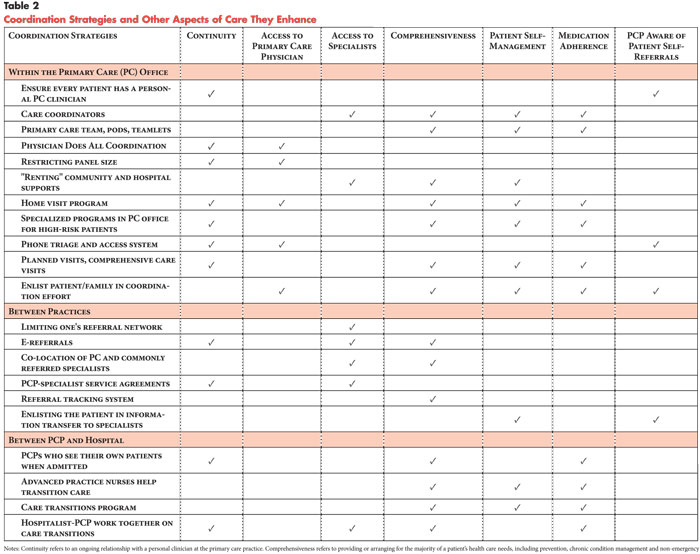
Coordination of Care by Primary Care Practices: Strategies, Lessons and Implications reports that "while there was no single recipe for coordination ... some cross-cutting lessons were identified, such as the value of a commitment to interpersonal continuity of care as a foundation for coordination." Medical home initiatives "if aligned with payment incentives ... have the potential to increase quality and satisfaction among patients and providers by helping to move the health care delivery system toward better coordinated care."

Archives of Internal Medicine reports that "computerized medication reconciliation tool and process redesign were associated with a decrease in unintentional medication discrepancies with potential for patient harm. Software integration issues are likely important for successful implementation of computerized medication reconciliation tools."

Health Care Policy and Marketplace Review has maintained a laser focus on the need for healthcare reform to result in real savings. In his latest post, Bob Laszewski contends that "health care reform means fixing the system so we stop spending/wasting so much more than every other industrial nation on health care thereby making our system more affordable and effective." In earlier posts, he referenced two December 2008 CBO reports on the potential savings associated with various reform programs: Key Issues in Analyzing Major Health Insurance Proposals and Budget Options Volume 1 Health Care. "If the CBO just rolls over and lets Congress make up excuses just to spend more for health care we will not have reform--we will only have a bigger fiscal disaster on our hands. How do you reform entitlements by pretending?"

The AMA announces initial partner agreements to provide a secure AMA portal offering a variety of practice management services.

Computer modeling predicts the spread of swine flu. One of the algorithms is rooted in human contact models derived from Where's George? which tracks the passage of one dollar bills from person to person.

HealthMap provides a global disease alert map, including tracking of swine

Thursday, March 26, 2009

The Week in Review - March 26, 2009

A look back at some of the best news stories (and some entertaining diversions) from the week in health care.
________________

"The number of medically disenfranchised has reached 60 million" according to a report from the National Association of Community Health Centers.

David Blumenthal, the new National Coordinator for Health Information Technology, weighs in on stimulating the adoption of health information technology. John Glaser will join David Blumenthal as an ONC advisor for 6 months, while retaining his role at Partners Healthcare.

Dr. Ashish Jha talks about the conversion to electronic medical records in this NPR interview. He found that "comprehensive" EHR systems are used by only 1.5% of hospitals and only 7.6% of hospitals have a "basic" EHR.

The California HealthCare Foundation releases a report on patient registration kiosks delivering value and increased patient satisfaction. Yet they are adopted by less than 10% of healthcare organizations.

Drs. Bates, Halamka and Middleton make the case for the effectiveness of healthcare technology.

Will IT Save Healthcare? on National Public Radio's "To the Point".

Can technology enable patients to be better advocates for their own care? The Wall Street Journal reports on how patients use "information therapy".

CCHIT plans to accelerate advanced technology certification programs in Clinical Decision Support, Interoperability, Quality and Security in order to better align with the objectives in the ARRA stimulus package.

Friday, March 20, 2009

HHS Names National Coordinator for Health Information Technology

HHS has named Dr. David Blumenthal to the post of National Coordinator for Health Information Technology.

Blumenthal is an expert in health policy and health care systems and is the founding director for the Institute of Health Policy at Mass General.

According to his bio, "Dr. Blumenthal’s research interests include the extent and consequences of academic-industrial relationships in the life sciences; professionalism and the determinants of physician behavior; the organization and financing of physicians services; the dissemination of health information technology; and quality management in health care organizations." Blumenthal served as Senior Health Advisor to Barack Obama during his campaign.
